AI Automation Audit: Choose Your First Business Workflow
Choose your first AI automation workflow with a practical audit worksheet, cost example and pilot checklist for small business operations.
Quick summary
Start with one repetitive workflow, measure its current effort and separate fixed rules from AI interpretation. Pilot it with clear acceptance criteria, an owner and a recovery plan before expanding.

An AI automation audit is a practical review of how work enters your business, which decisions people make, and where information moves between tools. Its purpose is to identify a small, measurable workflow that is worth automating. Buying an AI agent before doing this work can leave you with an impressive demo and the same operational bottleneck.
For a UK service business, a useful first project might be extracting enquiry details into a CRM, preparing a support reply for review, or collecting missing onboarding information. The right choice depends on your process, data and tolerance for mistakes. This guide gives you a worksheet and pilot plan you can use before commissioning a build.
Start with one operational bottleneck
Ask the people doing the work to describe the last five times the process happened. Walk through real examples rather than the ideal process in a slide deck. Record where each request arrived, which systems were opened, what was copied, who made a decision and how the task ended.
A workflow has a clear trigger and a clear completion condition. “Improve customer service” is too broad. “Turn an incoming delivery enquiry into a draft response with the correct order status” is specific enough to assess. It also exposes dependencies: the agent needs a reliable order lookup, permission to read it, and a fallback when a match is missing.
Record waiting time separately from handling time. A task that takes three minutes to complete but sits in an unowned inbox for two days may need better routing before it needs AI. Removing the waiting step can be more useful than accelerating the typing.
Use this automation audit worksheet
Create one record for each candidate workflow. Keep the descriptions short enough that the process owner can check them in a single meeting.
- Trigger: What event starts the work, and can the system detect it reliably?
- Inputs: Which fields, documents or messages are required? Which are frequently missing?
- Current effort: How many requests arrive, and how much active time does each take?
- Rules: Which decisions follow a fixed rule, and which need judgement?
- Destination: Which system should contain the final result?
- Exceptions: What happens with duplicates, ambiguous requests and unavailable systems?
- Owner: Who reviews uncertain cases and maintains the workflow?
- Success: What measurable outcome would justify continuing the pilot?
For example, a hypothetical maintenance company might receive repair enquiries by email. Staff copy an address and issue description into a job system, then assign a coordinator. The audit may show that address extraction needs language understanding, while assignment by postcode can use ordinary rules. These are different components and should be tested separately.
Decide where AI actually helps
Use conventional automation when inputs and rules are predictable: copying a submitted form field, creating a task on a specified date, or routing a record according to an agreed territory list. These steps do not become more valuable simply because an AI model is added.
AI is more useful when the input varies in wording or structure. It can propose categories for free-text enquiries, summarise a long conversation or extract candidate fields from a document. Validate those outputs before another system relies on them. A plausible-looking date is still wrong if it does not match the source document.
Human review belongs where the consequence of a mistake warrants it. A draft summary may be suitable for automatic preparation. A contractual promise or unusual customer adjustment may require an authorised person. The NIST AI Risk Management Framework provides a broader framework for identifying and managing AI risks. The worksheet here is an operational starting point, not a certification or compliance assessment.
Compare candidates without pretending to know the ROI
Score each workflow from one to five for frequency, avoidable effort, input consistency and ease of checking the output. Separately record the consequence of failure and the number of systems involved. Use these scores to start a discussion, not as an automatic investment decision.
Prefer a frequent, repetitive task with accessible inputs, a clear owner and reversible outputs. Delay workflows with unclear rules, unreliable source data or no person available to handle exceptions. Automating confusion usually makes the confusion travel faster.
Estimate capacity using your own measured baseline. In a hypothetical example, 300 monthly requests taking six minutes each require 30 handling hours. If a pilot reduces average handling to two minutes across all requests, including exceptions, the reduction is 20 hours. At an illustrative internal cost of £25 per hour, that represents £500 of capacity, not necessarily £500 removed from payroll.
Subtract software, model usage, maintenance and review costs before discussing value. Include setup costs separately, and decide how the released capacity would actually be used. Faster response times may matter even when headcount stays the same; measure that benefit rather than claiming a cash saving that has not occurred.
Design a pilot with an explicit stopping point
Choose one request type, one destination system and one accountable owner. Start by running the automation alongside the existing process. Compare its proposed outputs with checked examples before allowing it to make changes.
Set acceptance criteria before looking at results. For lead intake, this could mean correct required fields, no duplicate records during replay tests, and every failed submission appearing in an owned queue. Set thresholds based on the workflow's impact; there is no universal accuracy percentage that makes every automation safe to launch.
- Keep a representative test set, including missing fields and unusual wording.
- Log the source event, proposed action, result and review outcome.
- Test an expired connection, unavailable destination and repeated event.
- Provide a pause control and a documented manual fallback.
- Review errors with the process owner before expanding scope.
A pilot should answer a decision: expand, revise or stop. A working demonstration alone is insufficient. If most requests still require manual reconstruction, improve the input process or choose a narrower task.
Turn the audit into a useful project brief
Your brief should contain a process map, sample inputs, required integrations, field definitions, review rules and acceptance criteria. Specify who owns the accounts and configuration, how failures are reported, and what ongoing support covers. These details help you compare proposals on the same scope.
If enquiries are the bottleneck, our CRM lead intake automation guide explains the handoff from form to assigned record. If repeated questions dominate the workload, start with AI customer support and human handoff. For a broader introduction, read what AI automation agencies do.
Frequently asked questions
Can a small business start without replacing its software?
Often, yes, if the existing tools expose the required integrations or APIs. Check access, permissions and available fields first. A missing connection may change the project scope, but it does not automatically justify replacing the entire system.
How long should an automation pilot run?
Run it long enough to observe a representative mix of normal requests and exceptions. A calendar deadline alone is not evidence. A low-volume process may need a longer observation window plus carefully constructed test cases.
What should we bring to an initial automation discussion?
Bring a description of one repetitive task, anonymised examples, the tools involved and a rough request count. Explore Kreatrs AI automation services, or discuss your workflow with us to turn that information into a scoped first project.
Kreatrs Editorial
Kreatrs Media Team
Read more articles by Kreatrs Editorial on Kreatrs.
Related Blogs

AI Customer Support: Design a Reliable Human Handoff
Sep 26, 2026
Design AI customer support with clear escalation rules, useful conversation context and a reliable handoff to your human support team.

CRM Lead Intake Automation: From Enquiry to Assigned Task
Sep 26, 2026
Automate enquiry intake into your CRM with field validation, duplicate prevention, ownership rules and recovery when connected tools fail.
ATS-Friendly Resume Builder: Meet Rezyume
Sep 26, 2026
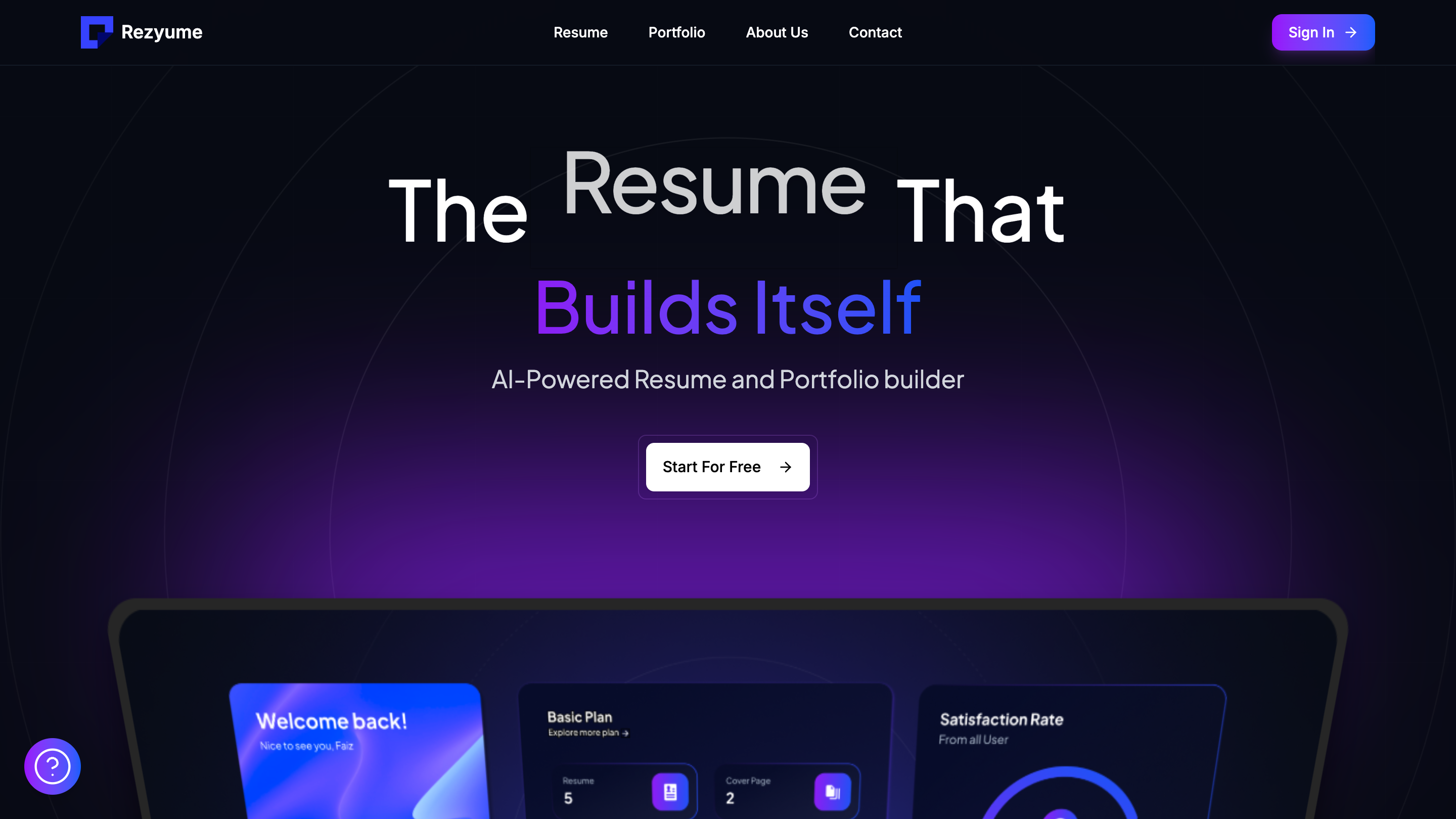
Rezyume is Kreatrs’ ATS-friendly resume builder. Draft resume, cover letter and portfolio from one profile, score against the job, export PDF or DOCX.